Think of any organization, like a bouncing ball. No two moments are alike Change is order of things. In such moments the leaders at the top need all the support they can get from their team. And for that clarity in communication be it timely updates , to them & to the team is equally paramount.
When the ball bounces are extreme, it could be many factors, like the winds of change that’s affecting it. Let’s call it external forces be it political, economic,global changes and more…
No one can predict things to the T but if risks are part of the buisness, then leadership needs both resilience from the entire team and quick decision taking to keep the company ‘ball balancing’ afloat.
In times of internal instability from unexpected forces within the company, affecting the state of buisness the leaders need more than just attention to detail to bring the dissenting fragments and solve crisis .
It’s a given that even in stable times there is always going to be that bounce in the ball think of it as the pulse in the heartbeat. Just that the force and velocity is a little more manageable . Acknowledging it as a part of risk management makes it more realistic than procrastinating from planning for it.
Whatever be the force, the torque generated decides the nature of impact it has. Being prepared and building the resilience muscle and creating a strong srategic team in easier times, helps in times of crisis management.
Embracing the changes is about understanding the experiences of highs and lows as a part of the journey. And most of all seeing the setbacks as an opportunity to bounce back stronger again.
Have you ever experienced how some people exude confidence in just their efforless presence?
It isnt just about the words you speaks but how you show up .
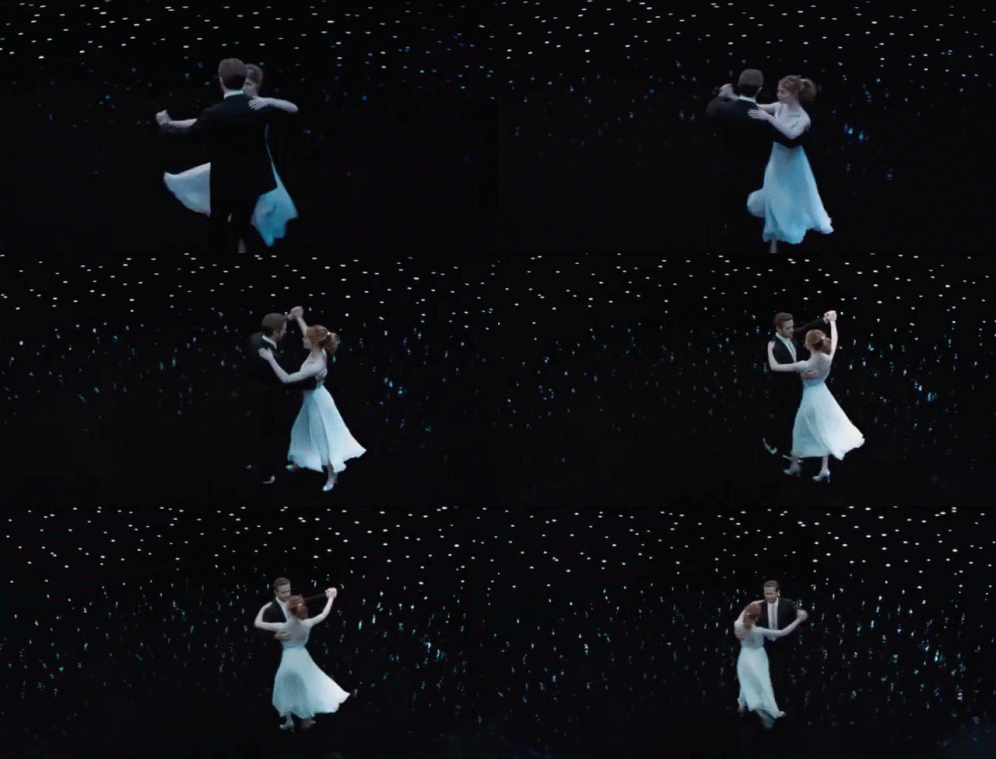
And if you can imagine how the body posture influences the way you move when in alignment you will sense how you exude a quiet confidence flowing in every step you take. Like dancers deportment,creating the art of presence. Quite akin to the silent language of leadership.
Here are a few insights on how deportment influences leadership.
More than 55% of communication is nonverbal and hence how you carry yourself speaks volumes without a word
Maintaining a good posture enhances confidence & authority thereby influences how others perceive leadership.
Composure & Presence
Dancers composure shapes their movements And while dance movement training builds poise it also enhances emotional intelligence & resilience all valuable traits for effective leadership.
Adaptability is Power
Whether in a dance or in leadership situations with quick decision taking & bouncing back in crisis the ability to move with fluidity & grace in changes that come with the challenges in time defines success.
Energy speaks louder than words
Leaders, like dancers, must be fully engaged aware of their space, their audience, their message.
Self Check-in
How are you breathing in this now? Is your breath calm or labored.?
What is your attitude reflecting ? Composure & confidence or Confusion and nervous hesitation.
Power of Alignment
How about if the next time you step into a room you become aware of your posture the way you are carrying yourself? And then intentionally align yourself.
After all, like dancing, leadership is consistent practice, not just a single performance.
With the world getting more and more materialistic and withdrawn and people truly becoming less communicative although connected by technology in every second , the human need to be heard becomes more and more necessary for somewhere it is drowning in the hustle and bustle of an ever busy world.
And as for creative freedom well each every moment offers infinite acreative flow that is awaiting your expression. Choice rests with you what you do with it .
It is of practical value to learn to like yourself. Since you must spend so much time with yourself you might as well get some satisfaction out of the relationship.
Teaching the waltz requires patience on the part of the dance instructor as well as the dance partners who are learning together.
I remember a student who kept struggling with rhythm. Assuming he wasn’t listening, wasn’t committed enough or just didn’t care, his partner became increasingly impatient. The tension increased with each error. She harshly corrected him as she clenched her grip. He withdrew, hesitant, his movements becoming stiffer.
I paused their practice and gently asked, what is it they think is happening. Her immediate reply was that he is not paying attention.
But he mentioned that while he was hearing the music, he kept doubting himself if he was stepping in rhythm.”
An interesting philosophical adage Hanlon’s Razor comes to mind… ‘Never attribute to malice that which can be explained by misunderstanding, incompetence, or a simple mistake.’
The student wasn’t disengaged -he was overwhelmed. His hesitation was caused by uncertainty, not neglect.
So all it needed was reframing the exercise.
We slowed down and concentrated on trust, posture and our breath. He regained his footing when his partner softened.
Leadership, much like dance, is about recognizing the unseen struggles behind each misstep.
Where might frustration be clouding reality in your professional life?
What assumptions could you challenge today to lead with more grace and understanding?
























 Savvy Raj
You must be logged in to post a comment.