Our Gardens Gift
Taro Or Arbi in Hindi
Every morning I try and spend some time in my terrace garden by myself, and I am often delighted by a gift or two from nature’s amazing abundance.
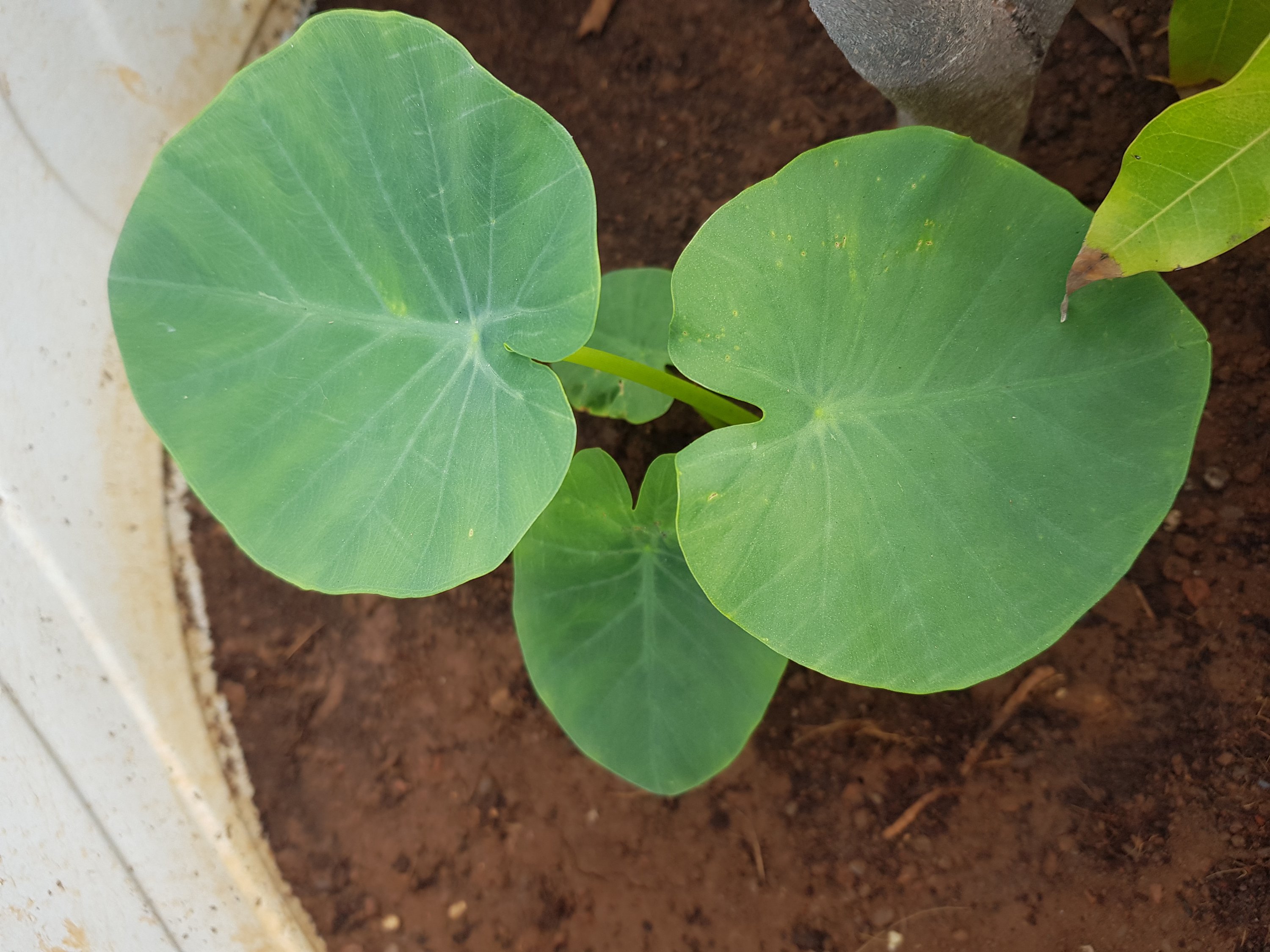
This morning I came across a refreshing sight of this plant growing right below our beautiful mango tree. I was compelled to use Google lens for more on this plant and found out it is Taro or what is commonly called Arbi in Hindi.
Here is a little bit more I read about this beautiful plant reaching out with a generous spread of leaves.
Taro is a starchy root vegetable that has a sweet, nutty flavor—a flavor and texture that seems a combination of chestnuts and potatoes. Taro can be steamed, boiled, fried, stir-fried, baked, and braised. It is often added to soups and stews where it absorbs fatty juices and serves as a nutty thickener.
It’s hard to describe taro flavor using other flavors. It is known to have a sweet taste with a hint of vanilla. People usually consume its edible corm and leaves. The corms, which have a light purple color due to phenolic pigments,are roasted, baked or boiled. The natural sugars give a sweet, nutty flavor. The starch is easily digestible, and since the grains are fine and small it is often used for baby food.
Young taro leaves and stems can be eaten after boiling twice to remove the acrid flavor. The leaves are a good source of vitamins A and C and contain more protein than the corms.
In its raw form, the plant is toxic due to the presence of calcium oxalate, and the presence of needle-shaped raphides in the plant cells. However, the toxin can be minimized and the tuber rendered palatable by cooking, or by steeping in cold water overnight (Source Wiki)
Interesting information on Taro.
Do you know more about Taro, do you have a taro plant in your garden? Would love to hear more.
Savvy
 Savvy Raj
You must be logged in to post a comment.